Most people do not lose financial ground because of one wild weekend or one terrible decision. More often, progress leaks out through habits that feel harmless in the moment: a subscription you meant to cancel, a balance you check without reviewing the statement, a quarterly bill you keep calling a surprise, or a savings plan that only happens if money is left at the end of the month. The Federal Reserve’s 2025 Survey of Household Economics and Decisionmaking found that 63% of adults said they would cover an unexpected $400 expense with cash or its equivalent, which suggests many households do not have much room for unnoticed drift. (federalreserve.gov)
That is why “silent habits” matter. They are not dramatic enough to trigger a full reset, but they are persistent enough to crowd out saving, keep you living closer to the edge than you realize, and make every real emergency feel bigger. CFPB research on spending behavior found that many consumers struggle because budgeting feels like a hassle, timely feedback is weak, and people often compare actual spending to their budget infrequently. (consumerfinance.gov)
- Silent money problems usually come from drift, not drama.
- Use the DRIFT Scorecard below to find where your progress is leaking.
- Fix order matters: review statements, budget irregular expenses, clean up recurring charges, then automate savings.
- A realistic reset should change your cash flow within one or two pay cycles.
- If the numbers still do not work after the cleanup, you may be dealing with an income-and-expense gap, not just bad habits.
This article is for informational purposes only and is not financial, tax, legal, or credit advice. If you are behind on debt, dealing with foreclosure risk, or choosing among debt-relief options, talk with a qualified professional such as a nonprofit credit counselor, HUD-approved housing counselor, CPA, or attorney when appropriate. (hud.gov)
Why quiet habits do so much damage
Silent habits usually share three traits. First, they run on default, so you do not actively choose them each time. Second, the cost shows up later, on a statement or when cash feels tight. Third, each individual decision looks too small to deserve attention. That pattern shows up in CFPB and FTC guidance on statement review, automatic debits, and recurring billing: the money leaves quietly unless you build a system that forces it back into view. (consumer.ftc.gov)
That’s another reason why intelligent individuals overlook this issue; as long as the check is still being deposited and most of your payments are being made on time, it’s very easy to think that everything must be okay. But, just because the lights are on doesn’t mean that you have made any significant gains. Instead, the real measure of progress lies in the amount of margin (cash reserves, paying down debt, and future goal opportunities) that you have accrued. A behavior that slowly decreases the amount of margin will ultimately cost you a lot; no matter how urgent it may or may not seem at the time.
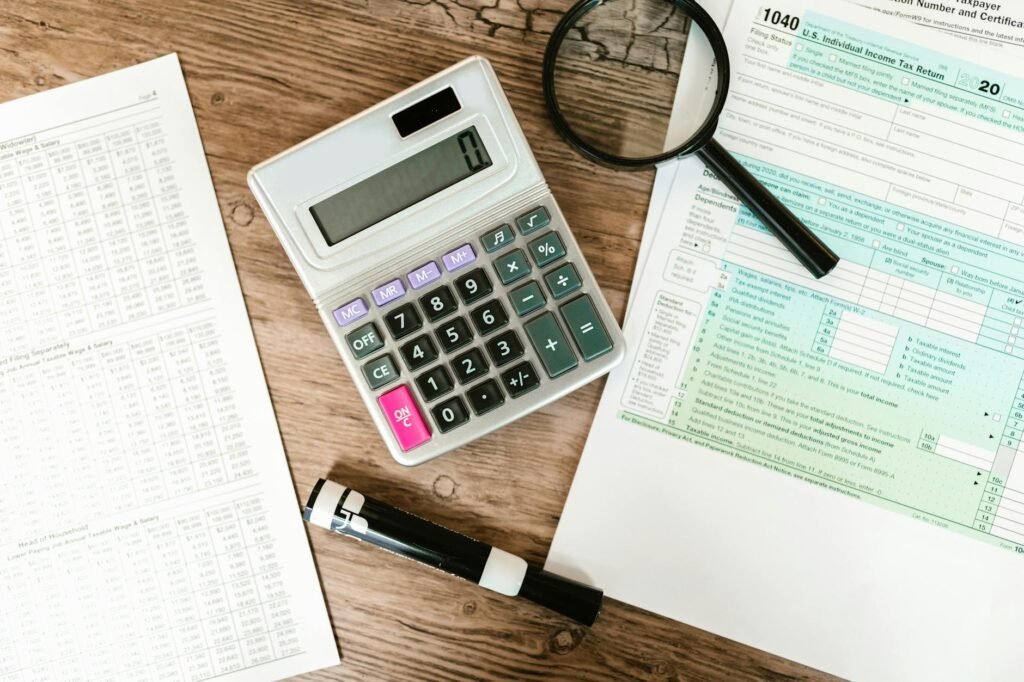
Use the DRIFT Scorecard before you change anything
For this article, utilize the KEEP-0 Scorecard: a fast way to see if you have financial drift and before you cut randomly. You will give each category zero (0), one (1), or two (2) points. Zero (0) means it is on target or in control. One (1) means that it is inconsistent or has room for improvement (not in control). And if two (2) points, the habit costs you money right now.
| Letter | What you are scoring | 0 points | 1 point | 2 points |
|---|---|---|---|---|
| D | Defaults and recurring charges | You review and prune them at least quarterly. | You know most of them, but a few are vague or outdated. | You are not fully sure what is hitting your account each month. |
| R | Review habit | You review bank and card activity weekly. | You check balances often but read full statements irregularly. | You mainly notice problems after cash gets tight. |
| I | Irregular expenses | You convert non-monthly bills into monthly set-asides. | You remember some, but still get caught by a few. | You routinely treat insurance, gifts, repairs, or annual fees as surprises. |
| F | Frictionless spending | You have caps or rules for convenience spending. | You mean to control it, but busy weeks break the plan. | Small card, app, or delivery purchases happen without a limit. |
| T | Tiny admin delays | You handle cancellations, disputes, due-date issues, and reimbursement tasks quickly. | You delay them, but eventually catch up. | You keep postponing small money tasks until they create fees, interest, or stress. |
Your score will indicate the beginning point for repairing your money habits. An average or normal score (0 to 3) indicates a level of maintenance with a very low to no significant leaks. An average or normal score (4 to 6) indicates you probably have some consistent low-level leaks (one to two) in the areas of categorically overspending, while a score of 7 or more indicates your problem is not a categorization issue but rather a passive approach to managing cash. Once you understand where to begin, you will need to begin by working on the line with the highest score first, working down toward the lowest scored line in sequential order.
Five silent habits that quietly erase momentum
1. Statement blindness
A lot of people check their account balance without checking what created it. That feels responsible, but it is incomplete. The FTC says to review your credit card statements when they arrive, or as soon as possible, to track spending and spot mistakes or unauthorized charges. The CFPB similarly advises reviewing statements closely every month. In practice, a weekly 10-minute review is often better than a dramatic monthly catch-up because it lets you see duplicates, recurring charges, and timing problems before they spread. (consumer.ftc.gov)
2. Irregular-expense amnesia
Insurance premiums, school costs, gifts, car registration, annual memberships, holiday travel, and seasonal utility spikes are not emergencies. They are irregular, but they are not random. The CFPB recommends looking back over several months so you do not miss less frequent expenses when assessing your spending. A strong rule here is simple: if a cost shows up every year, every quarter, or every season, divide it into a monthly amount and save for it monthly. (consumerfinance.gov)

3. Recurring charges that survive on inertia
Subscriptions are dangerous because they stop feeling like spending. The FTC warns that auto-renewals and negative-option offers keep billing you until you cancel, and the CFPB has warned about manipulative tactics that can make cancellation harder or keep people enrolled in charges they do not want. The fix is not to swear off every subscription. It is to force each one to earn its place. Rename each recurring charge as one of three things: useful weekly, useful occasionally, or dead weight. Dead weight gets canceled. Useful occasionally gets downgraded, paused, or moved to a shared family plan if appropriate. (consumer.ftc.gov)
4. Bills on autopay, savings on manual
Autopay can be helpful, but it is not a full system. The CFPB notes that automatic payments can help you pay bills on time, yet they can also trigger overdraft or nonsufficient-funds fees if you do not track the balance and timing. On the other side of the ledger, the FDIC says automatic transfers can make it easier to build savings over time. If your bills are automatic but your savings depend on leftovers, you have trained your system to fund everyone else first. Move at least one savings transfer to payday, even if the starting amount is modest. (consumerfinance.gov)

5. Small admin delays with expensive side effects
Some of the highest-return money tasks look too minor to matter: canceling an unused service, disputing a wrong charge, updating a payment method, requesting reimbursement from an HSA or FSA, or pulling your credit report to spot an error. They are easy to postpone because none of them feels urgent today. But delay has a cost. The FTC says you generally need to dispute billing errors within 60 days of the first statement showing the charge, and the CFPB says you can review your credit reports for free without hurting your score. Small tasks become expensive when you wait past the window that protects you. (consumer.ftc.gov)
A realistic household example
Suppose a family has keep_0 take-home income each month but believes they should be saving approximately keep_1 each month; however, the amount they saved has only increased about keep_2. It does not appear to be an issue until after they conduct their keep_14 audit. They have found keep_3 in charges that they had no clue they were even incurring, such as a car insurance payment that is billed at keep_4 every six months, which should have been classified as keep_5 each month. They have also spent about keep_6 on convenience items during busy weeks of work and approximately keep_7 each month on gifts, school materials, and one-time purchases that they keep referring to as one-time events, although they happen continuously. They found themselves drifting keep_8 without reference to it at all. Therefore, they stopped keep_9 from drifting, eliminated keep_10 from their convenience budget, created sinking funds to account for their true irregular expenditures, automated their keep_11 to savings upon receiving their paychecks, which raised their visible monthly progress from keep_12 to keep_13 and ensured that their upcoming insurance bills will not land on a credit card.
What to do in the next 14 days
- Download the last 90 days of checking, savings, and credit card activity. If you share finances, include both partners’ accounts.
- Highlight four categories only: recurring charges, irregular expenses, fees or interest, and convenience spending.
- Convert every non-monthly bill into a monthly set-aside number. An annual fee of $240 becomes $20 a month. A semiannual insurance bill of $1,200 becomes $200 a month.
- Cancel, pause, or downgrade three recurring charges immediately. Do not build a giant list first. Pick three and finish them.
- Set one automatic savings transfer for payday, not month-end. Start with an amount you can keep for three straight months.
- Create a 10-minute weekly review block on your calendar to check statements, not just balances.
- Make a short admin list with deadlines: dispute charge, cancel trial, update payment method, submit reimbursement, pull credit report. Then finish one task per week.
This works because it attacks hidden drift in the order it usually appears: visibility first, timing second, defaults third. The CFPB’s budgeting guidance specifically recommends checking several months of spending so you do not miss less frequent expenses, which is why a 90-day lookback is more useful than trying to remember from memory. (consumerfinance.gov)
Which fix should come first?
| If you notice this | The likely silent habit | First move | When you should feel the benefit |
|---|---|---|---|
| You keep asking where the money went. | Statement blindness. | Start a weekly statement review and flag all recurring charges. | Within 1 week. |
| Big bills keep feeling like emergencies. | Irregular-expense amnesia. | Create monthly sinking funds for every non-monthly bill. | Within 1 to 2 pay cycles. |
| You have subscriptions you forgot about. | Unchecked defaults. | Cancel, pause, or downgrade three charges now. | Same week. |
| Bills clear, but savings rarely happen. | Bills on autopay, savings on manual. | Move one savings transfer to payday. | Next paycheck. |
| You keep paying small fees or interest you did not plan for. | Admin delay and timing problems. | Set alerts, correct payment methods, and calendar deadlines. | Immediate to 30 days. |
Common mistakes that make the reset fail
- Using estimates instead of real transactions. Memory is almost always kinder than your statement history.
- Cutting one dramatic category while ignoring timing. Plenty of households are not overspending wildly; they are just budgeting monthly for bills that are not actually monthly.
- Canceling a few subscriptions and assuming the job is done. Recurring charges matter, but they are rarely the whole problem.
- Automating savings at an amount that causes an overdraft two days before payday. A system that bounces is not a system.
- Doing one audit and never repeating it. Quiet habits come back when life gets busy.
One important caution: stopping an automatic payment does not automatically cancel what you owe. The CFPB notes that if you stop an automatic debit on a loan or service, you may still need to cancel the contract separately or make the payment another way. (consumerfinance.gov)
When habit fixes are not enough
The audit may be honest, and it may reveal a difficult truth: you’re not just dealing with an issue where you have fallen into bad habits, but rather you have large bills and debt payments that don’t allow you to have enough income to support the basics of your lifestyle. If you have cleaned up any ‘silent leaks’ but still cannot pay for your basic expenses, it is time to stop working on your habit changes and focus on finding ways to make it through this difficult time.
- Protect essentials first: housing, utilities, food, insurance, and transportation needed for work.
- Contact lenders or servicers before you miss payments when possible; waiting usually narrows your options.
- If debt is the main strain, a nonprofit credit counselor may help with budgeting and debt-management planning.
- If housing is at risk, a HUD-approved housing counselor can help you review options and next steps.
The CFPB says credit counseling organizations are often nonprofit groups that can help with budgets, debt management plans, and money problems, and HUD maintains a nationwide housing counseling network for households that need housing-related help. This is the point where outside support can be more valuable than another homemade spreadsheet. (consumerfinance.gov)
How to verify that this is actually working
Do not judge the reset by whether you felt disciplined for a week. Judge it by whether your cash flow changed. After 30 days, compare four numbers with the prior month: total recurring charges, total fees and interest, amount transferred to savings, and end-of-month checking cushion. Then review one full bank statement and one credit card statement line by line. If you are working on credit cleanup too, pull your credit reports directly from the official source and check for errors; the CFPB says reviewing your own report does not hurt your score. (consumer.ftc.gov)
Bottom line
Financially unproductive habits are often not perceived as urgent enough for correction right now. This is how they are able to be very costly. To make quicker progress, don’t try to find a single drastic stop. Instead, start by making invisible your behavior surrounding money. Analyze your statements on a regular basis. Make irregular expenses a monthly item in your budget. Put a pencil to justify all subscriptions you have. Create an automatic savings transfer from each paycheck. Lastly, repeat this audit before drifting back.
FAQ
How often should I review my bank and credit card activity?
Weekly is a practical target for most households. Monthly is the bare minimum, but a weekly review is better at catching duplicate charges, forgotten subscriptions, and cash-flow timing problems before they become expensive.
What is the difference between an emergency expense and an irregular expense?
Unexpected emergencies occur, such as a new medical condition or urgent need for repairs. Irregular expenses can be anticipated but do not typically occur monthly. Examples of irregular expenses include annual fees, insurance premiums, holidays and back-to-school expenses. Generally, it is a good idea to create monthly sinking funds to cover irregular expenses.
Should I cancel autopay?
Autopay can be an excellent help to prevent paying late when used properly. Using autopay bilaterally but actively monitor its timing and make sure you have automatic savings set up, is still the best way to achieve bill payment without failing to pay on time. When stopping autopay, you also need to know how the bill or the loan will be paid.
How many subscriptions is too many?
A single universal number does not exist. What you should really be looking for, instead, is how often you use a charge each month and how much value that charge provides. If you have charges that do not provide a profound benefit to your week, or have replaced another, higher cost option, your charge may fall into either the “cancel” or “lower tier” categories.
What if I do the audit and there is still no room to save?
If you’re facing a cash flow problem, it is likely to be a structural issue rather than just a bad habit. At this stage, you’ll want to prioritize bill payments, explore ways to increase your income, seek help for debt relief strategies, and find professional assistance if you’re having difficulty managing your housing or unsecured debts.
References
- Federal Reserve Board – Economic Well-Being of U.S. Households in 2025 – https://www.federalreserve.gov/publications/files/2025-report-economic-well-being-us-households-202605.pdf
- CFPB – Consumer Insights on Managing Spending – https://www.consumerfinance.gov/documents/2664/201702_cfpb_Consumer-Insights-on-Managing-Spending.pdf
- CFPB – Assess your spending – https://www.consumerfinance.gov/owning-a-home/prepare/assess-your-spending/
- FTC Consumer Advice – Getting In and Out of Free Trials, Auto-Renewals, and Negative Option Subscriptions – https://consumer.ftc.gov/node/298618
- FTC Consumer Advice – Using Credit Cards and Disputing Charges – https://consumer.ftc.gov/node/77067
- CFPB – How to fix mistakes in your credit card bill – https://www.consumerfinance.gov/consumer-tools/credit-cards/how-to-fix-mistakes-in-your-credit-card-bill/
- CFPB – How do automatic payments from a bank account work? – https://www.consumerfinance.gov/ask-cfpb/how-do-automatic-debit-payments-from-my-bank-account-work-en-2021/
- CFPB – How do I stop automatic payments from my bank account? – https://www.consumerfinance.gov/ask-cfpb/how-do-i-stop-automatic-payments-from-my-bank-account-en-2023/
- FDIC – Save, Organize, and Streamline Your Finances – https://www.fdic.gov/consumer-resource-center/2022-02/save-organize-and-streamline-your-finances
- CFPB – How do I get a free copy of my credit reports? – https://www.consumerfinance.gov/ask-cfpb/how-do-i-get-a-free-copy-of-my-credit-reports-en-5/
- CFPB – Does requesting my credit report hurt my credit score? – https://www.consumerfinance.gov/ask-cfpb/does-requesting-my-credit-report-hurt-my-credit-score-en-1229/
- HUD – Housing Counseling – https://www.hud.gov/stat/sfh/housing-counseling/